
Service area
General contractor in
Glen Ridge, New Jersey
Glen Ridge
Bathroom, kitchen and plaster work for houses built between the 1890s and the 1920s, done in the right order with the period detail kept.
Glen Ridge is a small borough with an unusually consistent housing stock: center-hall Colonials, Victorians and Foursquares built roughly between the 1890s and the 1920s, most of it sitting inside a historic district that covers nearly the whole town. Houses of that age reward careful work and punish shortcuts. We are a general contractor based in nearby Clifton, and most of what we do — bathroom and kitchen remodeling, plaster, tile, carpentry — is exactly the kind of interior work a hundred-year-old house needs on a regular cycle.
We self-perform the core trades — tile, drywall and plastering, carpentry, painting — rather than brokering everything out, which matters in older houses because the person who opens a wall should be the person who understands what he is looking at. Our background includes full gut renovations and restoration work in New York brownstones, with herringbone oak floors, exposed brick and book-matched marble, so period detail is not a stretch for us. We hold a 4.9-star rating across 53 Google reviews. Call (973) 968-8646.
What Colonials, Victorians and Foursquares from the 1890s-1920s actually need
Nearly every house here is plaster on wood lath, and plaster is the material owners most often see butchered. The common shortcut is to tear out a cracked ceiling and hang drywall, which changes the surface texture, the wall depth and the trim reveals all at once. Cracked plaster can usually be saved: keys that have broken off the lath get reattached with adhesive and plaster washers, cracks get bridged with mesh and setting compound, and the wall gets skim-coated back to flat. It is slower than board. It is also the reason a repaired room still looks like the rest of the house.
Kitchens and bathrooms from this era were small, and enlarging them means working inside balloon framing, plumbing stacks that were placed a century ago, and floors that have settled out of level. Before tile goes down we check the framing, sister joists where they are undersized, and flatten the floor, because tile follows whatever is under it. In wet areas the board gets a real waterproofing membrane, with seams and penetrations sealed, since cement board on its own lets water pass straight through. None of this shows in the finished photos. All of it decides whether the room lasts.
Owners in Glen Ridge tend to know their houses, and they notice when trim does not match. When we open a wall or move a doorway, casings and baseboards get replicated in the original profiles, not approximated with stock lumber from the yard. Where original doors or built-ins survive, we would rather repair and rehang than replace. And where glazing is involved, proportion matters: a true divided-light pattern has muntin widths and lite sizes that off-the-shelf substitutes rarely get right, and the mismatch reads instantly from the street or the hallway.
Working in a borough that is almost entirely a historic district
Nearly all of the borough sits inside the Glen Ridge Historic District, and the practical effect is simple: exterior alterations commonly go through historic-preservation review, while interior renovation generally does not. A kitchen, a bathroom or a plaster repair is a building-permit matter, not a design-review matter. Where a project touches the outside — a new window opening, a change to a porch, work visible from the street — we tell you up front that approval belongs in the schedule before demolition does, and we scope the drawings so the reviewable items are clearly separated from the interior work.
The other half is sequencing. Rough plumbing and electrical come before insulation, insulation before board, board before tile, tile before glass templating; get that order wrong and finished work comes back out at somebody's expense. In an occupied older house we add protection to the list: floors papered and boarded, the work zone sealed off with dust barriers, and deliveries staged so a dumpster is not parked under a mature street tree for a month. We file the building permits, meet the inspectors, and keep the paperwork moving so the trades are never standing around waiting on it.
Why bathrooms, kitchens and plaster lead the list here
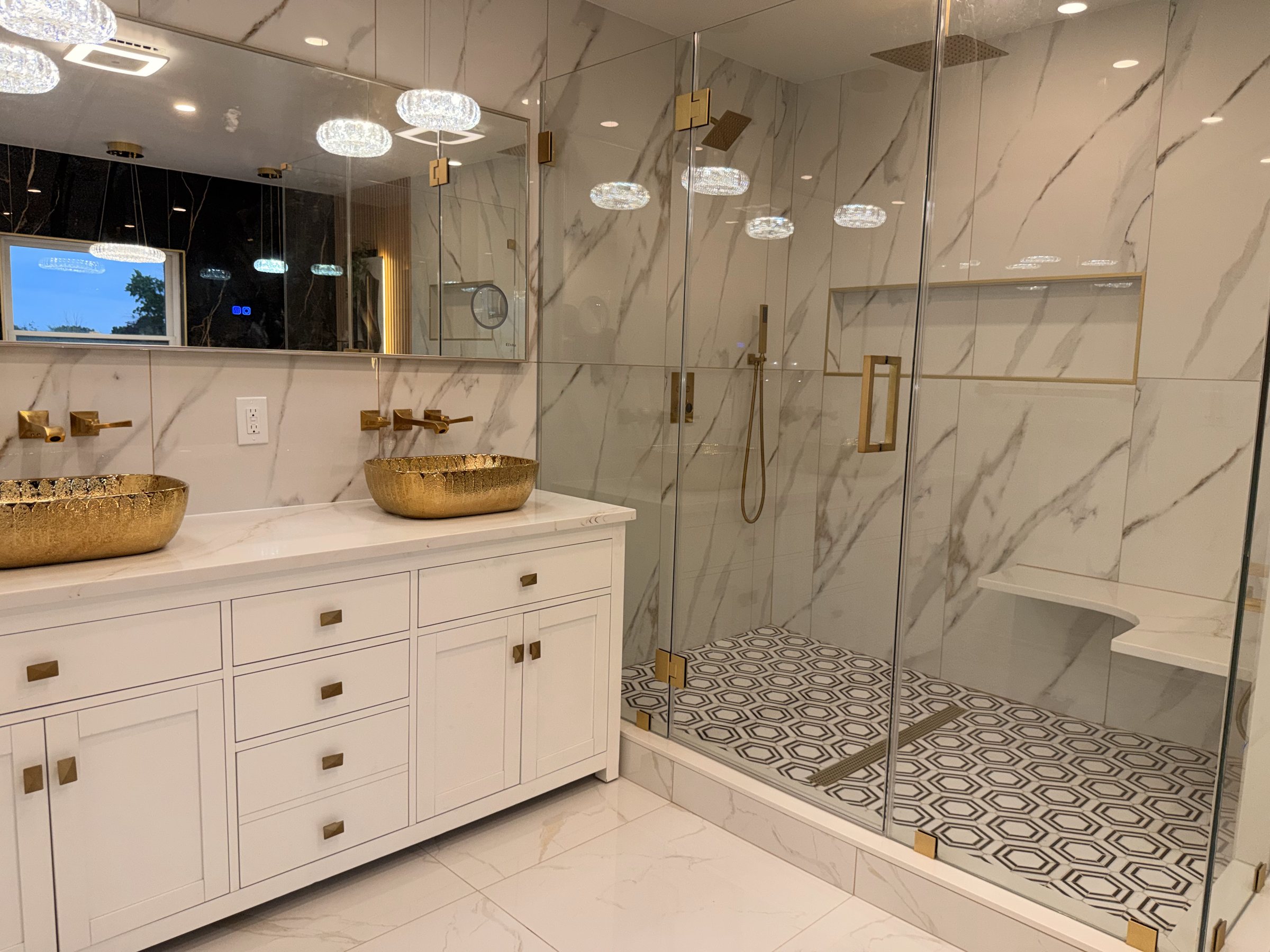
Bathroom remodeling is our largest trade, and it maps directly onto this housing stock: houses from the 1890s through the 1920s were built with few bathrooms, often one full bath serving four bedrooms, and the renovation questions are always the same. Can a hall bath be reworked for two children. Can a primary suite be carved out of a small bedroom without wrecking the floor plan. Can the original hex tile or cast-iron tub be kept while everything behind the walls is brought current. We do this work constantly, and the plumbing, tile and carpentry stay in our own hands.
Kitchen remodeling runs a close second, usually as part of opening a closed-off service kitchen to the dining room while keeping the casework in character with the house. Around those two anchors sits the steady work: plaster repair and skim-coating, interior painting with proper prep on old woodwork, carpentry from replicated casings to built-ins, and the handyman list, a sticking pocket door, a soft spot in a porch floor, a stair rail gone loose, that a hundred-year-old house generates every year. For owners planning something larger, we also take on full gut renovations and whole-home projects across North Jersey.
In their words
From our Google reviews
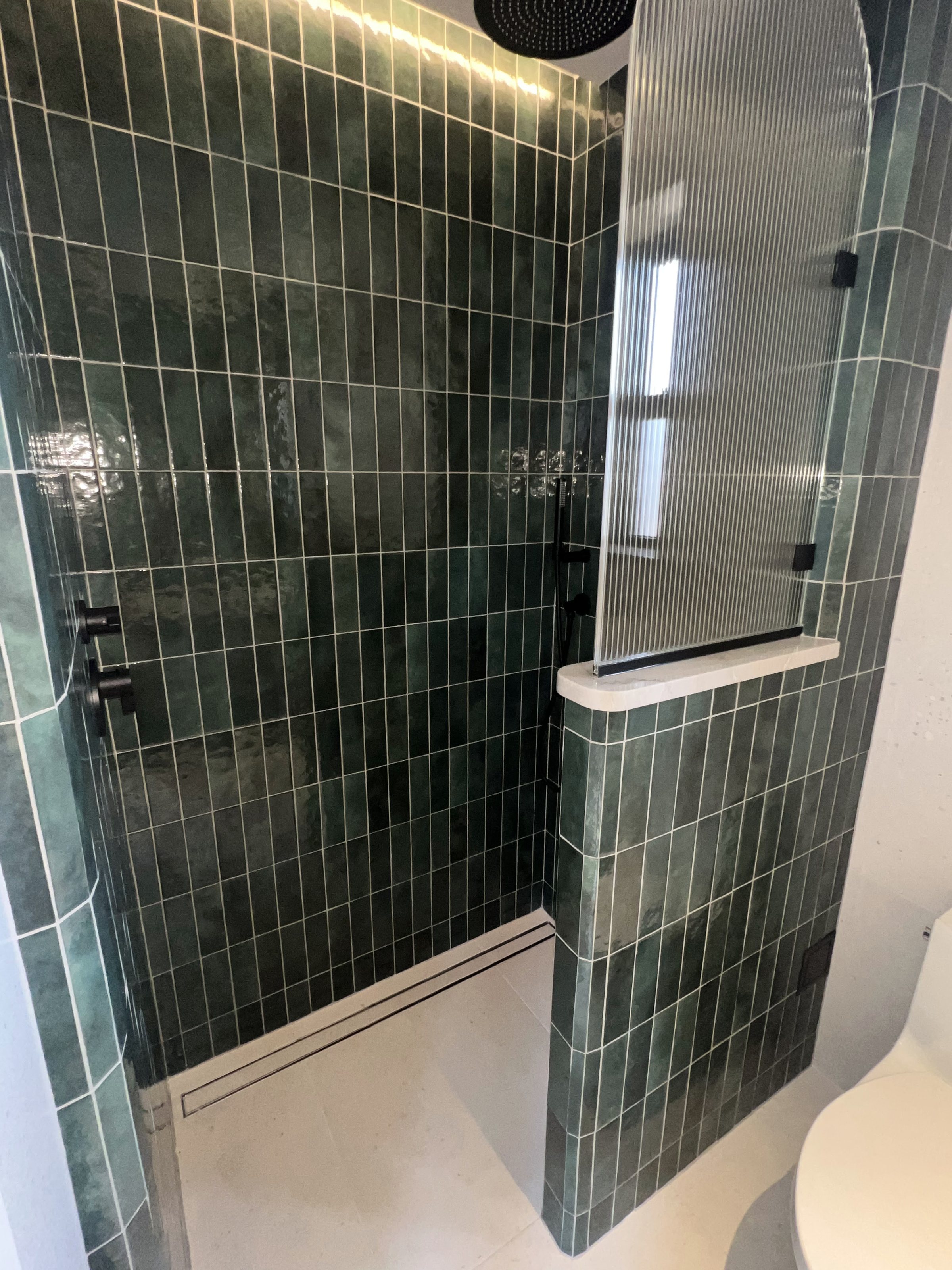
I rarely leave reviews, but this company truly impressed me. We were referred by a friend and hired them to install a half bathroom in our basement. From the start, they were professional, organized, and responsive to our concerns. One of my biggest worries was the timeline, but they promised a 10-day turnaround—and delivered right on time. The finished bathroom looks flawless, like it was always part of the house. We're beyond satisfied and will definitely be using them again to build a custom bar!Tangiss MurrellGoogle review
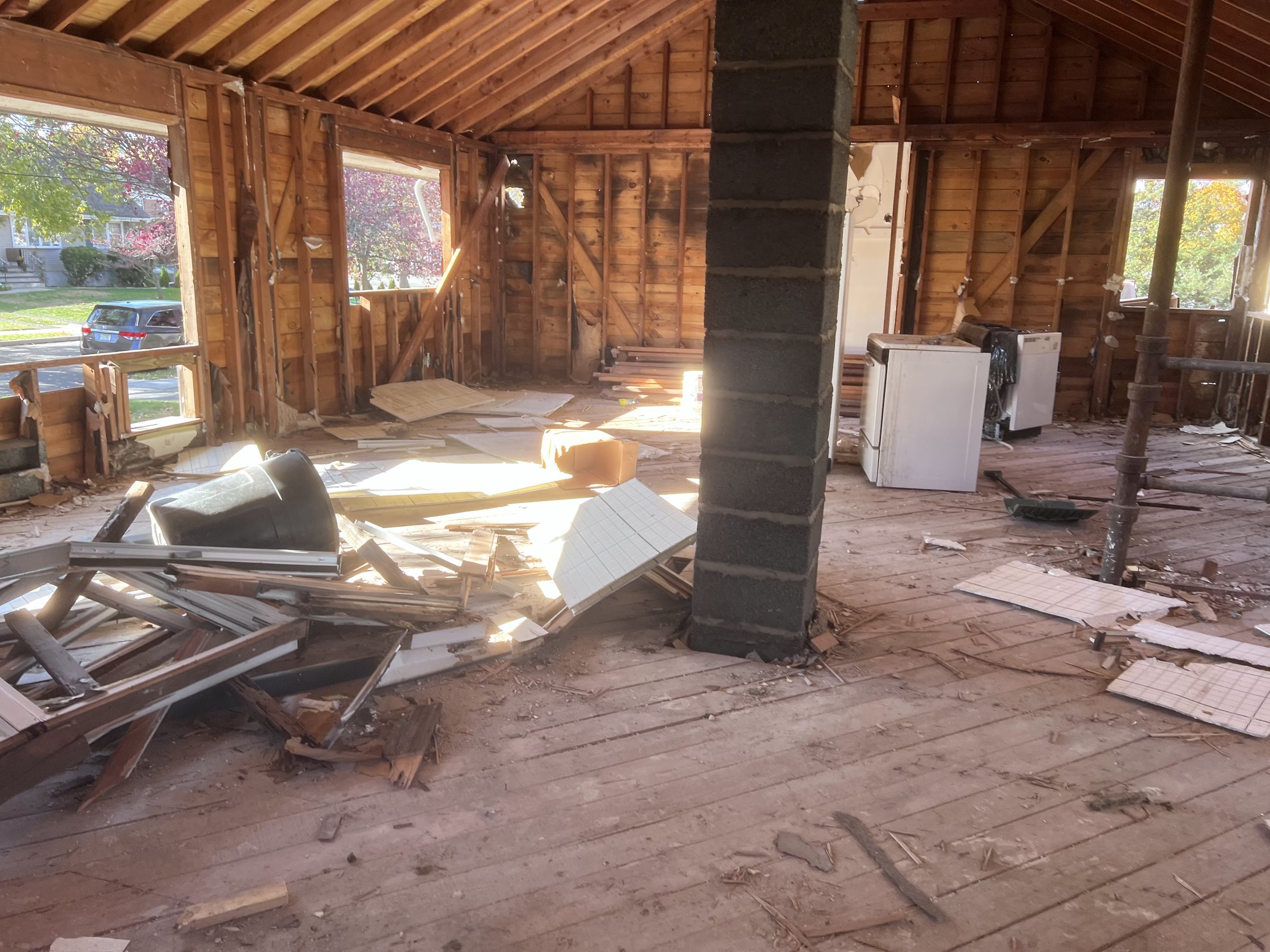
Amazing in every way. Did a full gut for my 60's home and it turned out beautiful. The home looks and feels like a brand new build.Mo BakerGoogle review
Common questions
Glen Ridge homeowners ask
Do I need historic-preservation approval to remodel my kitchen or bathroom?
Usually not. Historic-preservation review applies to exterior alterations: siding, windows, porches, anything that changes how the house reads from the street. Interior kitchen, bathroom and plaster work is generally a standard building-permit matter. Where a project crosses that line, for example a new or enlarged window opening in a bathroom wall, we flag it in the estimate and put the approval ahead of demolition in the schedule.
Can you repair original plaster instead of replacing it with drywall?
Yes, and in most rooms that is what we recommend. Loose plaster gets reattached to the lath with adhesive and washers, cracks get bridged and skim-coated, and only sections beyond saving get cut back to sound material. Drywall has its place, a gutted bathroom being the obvious one, but a patched wall in a hundred-year-old room should match the depth and texture of the plaster around it.
Can you match the original trim and moldings if a wall gets opened up?
Yes. We measure the existing profile and have knives ground to replicate it, or build the profile up from stock components when that reproduces it accurately. Casings, baseboards and picture rail in these houses are deeper and heavier than anything sold off the shelf, and a close-enough substitute is obvious the moment paint goes on. Matching the profile costs a little more once and looks right permanently.
Can we live in the house while you renovate a bathroom or kitchen?
Most families do. We seal the work area with dust barriers, protect the floors along the access route, and keep one bathroom working at all times; in a one-bath house that means planning the plumbing changeover down to the day. Old-house demolition is dusty, plaster especially, so containment is not a courtesy here. It is part of the job.
You're based in Clifton. Do you actually work in Glen Ridge?
Yes. Clifton is the next town over from the Montclair and Glen Ridge area, and our crews work across Essex and Passaic County daily. Proximity matters on renovations because old houses produce surprises, and a contractor twenty towns away handles a surprise by phone. We can be on site quickly for punch-list items and mid-project decisions, and estimates in the borough are free.
Our house still has its original windows and steam radiators. Do renovations have to remove them?
No. Radiators can be temporarily disconnected, moved or re-piped around a new layout, and we plan tile and flooring so they land back cleanly. Original windows are usually a restoration question rather than a replacement one, and because window changes on these houses face exterior review anyway, keeping them is often the simpler path as well as the better-looking one.
Start here
Tell us what you
are planning
We do not quote renovation work over the phone. We come and look at the space, then give you a written scope that says what is included and what is not.